Posted on Leave a comment

Ipamorelin 5mg Dosage Protocol

Preparation & Measurement Guide

Ipamorelin 5mg Dosage Protocol

Preparation, measurement, commonly documented protocol ranges, and storage for a Ipamorelin 5mg vial.

Research use only
Educational summary of a commonly documented convention. Not approved for human use.
Vial Size
Ipamorelin 5mg
Preparation
1mL bacteriostatic water
Concentration
5mg/mL after preparation
Documented Convention
100-200mcg once daily

1. Preparation and Measurement

Ipamorelin 5mg With 1mL of Diluent

Add 1mL of bacteriostatic water to the vial. The resulting concentration is 5mg/mL. On a U-100 syringe, each unit contains 50mcg.

5mg / 1mL = 5mg/mL
1 U-100 unit = 0.01mL = 50mcg

Preparation

  1. Draw 1mL of bacteriostatic water using sterile equipment.
  2. Let the liquid run slowly down the inside wall of the vial.
  3. Gently swirl until dissolved. Do not shake.
  4. Label with the preparation date and refrigerate.

Check the calculation with the peptide calculator.

2. Commonly Documented Schedule

Route commonly described: subcutaneous in circulated protocols. Frequency: once daily.

Period Documented amount Measurement
Weeks 1-2 100mcg once daily 0.02mL / 2 units
Weeks 3-4 150mcg once daily 0.03mL / 3 units
Weeks 5-8 200mcg once daily 0.04mL / 4 units

Vial estimate: One 5mg vial contains approximately 50 administrations at the first listed amount or 25 at the final listed amount.

Practical Notes

  • The table applies only to this vial prepared with exactly 1mL.
  • Some entries are very small measurements; account for the accuracy of the measuring device.
  • Record the amount, date, and preparation used.

3. Supplies Needed

  • Ipamorelin 5mg vial.
  • 1mL of bacteriostatic water per vial.
  • Sterile U-100 syringes.
  • Alcohol swabs.
  • Sharps container.

4. Storage and Handling

  • Keep unopened vials cool, dry, dark, and protected from moisture.
  • After preparation, refrigerate at 2-8 degrees C.
  • Protect from light and avoid repeated freeze-thaw cycles.
  • Do not use material with particles, discoloration, or a damaged seal.

5. Research Context

Ipamorelin is a growth-hormone secretagogue studied in experimental pharmacology and early human research. The available literature does not establish a standard therapeutic protocol.

Ipamorelin is not an approved therapeutic drug. The staged schedule records a commonly circulated convention for comparison.

Primary Research and Regulatory References

  1. Ipamorelin growth-hormone secretagogue study
  2. Ipamorelin pharmacology study

Research Materials

Review Ipamorelin 5mg Product Information

← Back to Dosage Protocols

Research-use disclaimer: Ipamorelin 5mg products sold by Vialcrest are intended strictly for laboratory research. They are not intended for human consumption, injection, therapeutic use, medical use, diagnostic use, or veterinary use. This article documents how a commonly circulated or published convention is described for educational comparison. It does not endorse that convention, establish safety or efficacy, or provide medical advice.

Posted on Leave a comment

BPC-157 + TB-500 5mg+5mg Dosage Protocol

Preparation & Measurement Guide

BPC-157 + TB-500 5mg+5mg Dosage Protocol

Preparation, measurement, commonly documented protocol ranges, and storage for a BPC-157 + TB-500 5mg+5mg vial.

Research use only
Educational summary of a commonly documented convention. Not approved for human use.
Vial Size
5mg BPC-157 + 5mg TB-500
Preparation
2mL bacteriostatic water
Concentration
5mg/mL after preparation
Documented Convention
500mcg-1mg total once daily

1. Preparation and Measurement

BPC-157 + TB-500 5mg+5mg With 2mL of Diluent

Add 2mL of bacteriostatic water to the vial. The resulting concentration is 5mg/mL. On a U-100 syringe, each unit contains 50mcg.

10mg / 2mL = 5mg/mL
1 U-100 unit = 0.01mL = 50mcg

Preparation

  1. Draw 2mL of bacteriostatic water using sterile equipment.
  2. Let the liquid run slowly down the inside wall of the vial.
  3. Gently swirl until dissolved. Do not shake.
  4. Label with the preparation date and refrigerate.

Check the calculation with the peptide calculator.

2. Commonly Documented Schedule

Route commonly described: subcutaneous in circulated protocols. Frequency: once daily.

Period Documented amount Measurement
Weeks 1-2 250mcg BPC-157 + 250mcg TB-500 once daily 0.1mL / 10 units
Weeks 3-4 375mcg BPC-157 + 375mcg TB-500 once daily 0.15mL / 15 units
Weeks 5-8 500mcg BPC-157 + 500mcg TB-500 once daily 0.2mL / 20 units

Vial estimate: One 10mg vial contains approximately 20 administrations at the first listed amount or 10 at the final listed amount.

Practical Notes

  • The table applies only to this vial prepared with exactly 2mL.
  • The vial contains 5mg BPC-157 + 5mg TB-500; all measurements preserve that fixed component ratio.
  • Record the amount, date, and preparation used.

3. Supplies Needed

  • BPC-157 + TB-500 5mg+5mg vial.
  • 2mL of bacteriostatic water per vial.
  • Sterile U-100 syringes.
  • Alcohol swabs.
  • Sharps container.

4. Storage and Handling

  • Keep unopened vials cool, dry, dark, and protected from moisture.
  • After preparation, refrigerate at 2-8 degrees C.
  • Protect from light and avoid repeated freeze-thaw cycles.
  • Do not use material with particles, discoloration, or a damaged seal.

5. Research Context

BPC-157 and thymosin-related peptides have separate preclinical research histories, but the exact combined vial has not been validated in controlled human trials.

The blend is not an approved therapeutic drug. Findings for either component alone cannot establish the safety, efficacy, or interaction profile of the combination.

Primary Research and Regulatory References

  1. Thymosin beta-4 wound-healing research
  2. Thymosin beta-4 cell-migration study
  3. BPC-157 rat Achilles tendon study
  4. FDA: BPC-157 compounding and safety concerns

Research Materials

Review BPC-157 + TB-500 5mg+5mg Product Information

← Back to Dosage Protocols

Research-use disclaimer: BPC-157 + TB-500 5mg+5mg products sold by Vialcrest are intended strictly for laboratory research. They are not intended for human consumption, injection, therapeutic use, medical use, diagnostic use, or veterinary use. This article documents how a commonly circulated or published convention is described for educational comparison. It does not endorse that convention, establish safety or efficacy, or provide medical advice.

Posted on Leave a comment

CJC-1295 + Ipamorelin 5mg+5mg Dosage Protocol

Preparation & Measurement Guide

CJC-1295 + Ipamorelin 5mg+5mg Dosage Protocol

Preparation, measurement, commonly documented protocol ranges, and storage for a CJC-1295 + Ipamorelin 5mg+5mg vial.

Research use only
Educational summary of a commonly documented convention. Not approved for human use.
Vial Size
5mg CJC-1295 + 5mg Ipamorelin
Preparation
2mL bacteriostatic water
Concentration
5mg/mL after preparation
Documented Convention
100-200mcg of each once daily

1. Preparation and Measurement

CJC-1295 + Ipamorelin 5mg+5mg With 2mL of Diluent

Add 2mL of bacteriostatic water to the vial. The resulting concentration is 5mg/mL. On a U-100 syringe, each unit contains 50mcg.

10mg / 2mL = 5mg/mL
1 U-100 unit = 0.01mL = 50mcg

Preparation

  1. Draw 2mL of bacteriostatic water using sterile equipment.
  2. Let the liquid run slowly down the inside wall of the vial.
  3. Gently swirl until dissolved. Do not shake.
  4. Label with the preparation date and refrigerate.

Check the calculation with the peptide calculator.

2. Commonly Documented Schedule

Route commonly described: subcutaneous in circulated protocols. Frequency: once daily.

Period Documented amount Measurement
Weeks 1-2 100mcg CJC-1295 + 100mcg Ipamorelin once daily 0.04mL / 4 units
Weeks 3-4 150mcg CJC-1295 + 150mcg Ipamorelin once daily 0.06mL / 6 units
Weeks 5-8 200mcg CJC-1295 + 200mcg Ipamorelin once daily 0.08mL / 8 units

Vial estimate: One 10mg vial contains approximately 50 administrations at the first listed amount or 25 at the final listed amount.

Practical Notes

  • The table applies only to this vial prepared with exactly 2mL.
  • Some entries are very small measurements; account for the accuracy of the measuring device.
  • The vial contains 5mg CJC-1295 + 5mg Ipamorelin; all measurements preserve that fixed component ratio.
  • Record the amount, date, and preparation used.

3. Supplies Needed

  • CJC-1295 + Ipamorelin 5mg+5mg vial.
  • 2mL of bacteriostatic water per vial.
  • Sterile U-100 syringes.
  • Alcohol swabs.
  • Sharps container.

4. Storage and Handling

  • Keep unopened vials cool, dry, dark, and protected from moisture.
  • After preparation, refrigerate at 2-8 degrees C.
  • Protect from light and avoid repeated freeze-thaw cycles.
  • Do not use material with particles, discoloration, or a damaged seal.

5. Research Context

CJC-1295 and ipamorelin have each been studied for effects on growth-hormone signalling, but published studies do not validate this exact combined vial or the staged schedule shown here.

The blend is not an approved therapeutic drug. Component evidence cannot establish the safety or efficacy of the combined research material.

Primary Research and Regulatory References

  1. CJC-1295 growth-hormone and IGF-1 study
  2. CJC-1295 pharmacokinetic study
  3. Ipamorelin growth-hormone secretagogue study

Research Materials

Review CJC-1295 + Ipamorelin 5mg+5mg Product Information

← Back to Dosage Protocols

Research-use disclaimer: CJC-1295 + Ipamorelin 5mg+5mg products sold by Vialcrest are intended strictly for laboratory research. They are not intended for human consumption, injection, therapeutic use, medical use, diagnostic use, or veterinary use. This article documents how a commonly circulated or published convention is described for educational comparison. It does not endorse that convention, establish safety or efficacy, or provide medical advice.

Posted on Leave a comment

Epitalon 10mg Dosage Protocol

Preparation & Measurement Guide

Epitalon 10mg Dosage Protocol

Preparation, measurement, commonly documented protocol ranges, and storage for a Epitalon 10mg vial.

Research use only
Educational summary of a commonly documented convention. Not approved for human use.
Vial Size
Epitalon 10mg
Preparation
2mL bacteriostatic water
Concentration
5mg/mL after preparation
Documented Convention
5mg daily for 10-20 days

1. Preparation and Measurement

Epitalon 10mg With 2mL of Diluent

Add 2mL of bacteriostatic water to the vial. The resulting concentration is 5mg/mL. On a U-100 syringe, each unit contains 50mcg.

10mg / 2mL = 5mg/mL
1 U-100 unit = 0.01mL = 50mcg

Preparation

  1. Draw 2mL of bacteriostatic water using sterile equipment.
  2. Let the liquid run slowly down the inside wall of the vial.
  3. Gently swirl until dissolved. Do not shake.
  4. Label with the preparation date and refrigerate.

Check the calculation with the peptide calculator.

2. Commonly Documented Schedule

Route commonly described: subcutaneous in circulated protocols. Frequency: once daily for a defined cycle.

Period Documented amount Measurement
Days 1-10 5mg once daily 1mL / 100 units
Days 11-20 5mg once daily, when a 20-day convention is documented 1mL / 100 units

Vial estimate: One 10mg vial contains approximately 2 documented-size administrations at 5mg.

Practical Notes

  • The table applies only to this vial prepared with exactly 2mL.
  • Record the amount, date, and preparation used.

3. Supplies Needed

  • Epitalon 10mg vial.
  • 2mL of bacteriostatic water per vial.
  • Sterile U-100 syringes.
  • Alcohol swabs.
  • Sharps container.

4. Storage and Handling

  • Keep unopened vials cool, dry, dark, and protected from moisture.
  • After preparation, refrigerate at 2-8 degrees C.
  • Protect from light and avoid repeated freeze-thaw cycles.
  • Do not use material with particles, discoloration, or a damaged seal.

5. Research Context

Epitalon has been examined mainly in cell and animal models involving telomerase, oxidative stress, and aging-related pathways. Human evidence is limited and does not establish a standard protocol.

Epitalon is not an approved therapeutic drug. The 10-20 day table records a commonly circulated convention rather than a validated clinical schedule.

Primary Research and Regulatory References

  1. Epitalon and telomerase activity in human cells
  2. Epitalon experimental aging research

Research Materials

Review Epitalon 10mg Product Information

← Back to Dosage Protocols

Research-use disclaimer: Epitalon 10mg products sold by Vialcrest are intended strictly for laboratory research. They are not intended for human consumption, injection, therapeutic use, medical use, diagnostic use, or veterinary use. This article documents how a commonly circulated or published convention is described for educational comparison. It does not endorse that convention, establish safety or efficacy, or provide medical advice.

Posted on Leave a comment

Epitalon 50mg Dosage Protocol

Preparation & Measurement Guide

Epitalon 50mg Dosage Protocol

Preparation, measurement, commonly documented protocol ranges, and storage for a Epitalon 50mg vial.

Research use only
Educational summary of a commonly documented convention. Not approved for human use.
Vial Size
Epitalon 50mg
Preparation
2mL bacteriostatic water
Concentration
25mg/mL after preparation
Documented Convention
5mg daily for 10-20 days

1. Preparation and Measurement

Epitalon 50mg With 2mL of Diluent

Add 2mL of bacteriostatic water to the vial. The resulting concentration is 25mg/mL. On a U-100 syringe, each unit contains 250mcg.

50mg / 2mL = 25mg/mL
1 U-100 unit = 0.01mL = 250mcg

Preparation

  1. Draw 2mL of bacteriostatic water using sterile equipment.
  2. Let the liquid run slowly down the inside wall of the vial.
  3. Gently swirl until dissolved. Do not shake.
  4. Label with the preparation date and refrigerate.

Check the calculation with the peptide calculator.

2. Commonly Documented Schedule

Route commonly described: subcutaneous in circulated protocols. Frequency: once daily for a defined cycle.

Period Documented amount Measurement
Days 1-10 5mg once daily 0.2mL / 20 units
Days 11-20 5mg once daily, when a 20-day convention is documented 0.2mL / 20 units

Vial estimate: One 50mg vial contains approximately 10 documented-size administrations at 5mg.

Practical Notes

  • The table applies only to this vial prepared with exactly 2mL.
  • Record the amount, date, and preparation used.

3. Supplies Needed

  • Epitalon 50mg vial.
  • 2mL of bacteriostatic water per vial.
  • Sterile U-100 syringes.
  • Alcohol swabs.
  • Sharps container.

4. Storage and Handling

  • Keep unopened vials cool, dry, dark, and protected from moisture.
  • After preparation, refrigerate at 2-8 degrees C.
  • Protect from light and avoid repeated freeze-thaw cycles.
  • Do not use material with particles, discoloration, or a damaged seal.

5. Research Context

Epitalon has been examined mainly in cell and animal models involving telomerase, oxidative stress, and aging-related pathways. Human evidence is limited and does not establish a standard protocol.

Epitalon is not an approved therapeutic drug. The 10-20 day table records a commonly circulated convention rather than a validated clinical schedule.

Primary Research and Regulatory References

  1. Epitalon and telomerase activity in human cells
  2. Epitalon experimental aging research

Research Materials

Review Epitalon 50mg Product Information

← Back to Dosage Protocols

Research-use disclaimer: Epitalon 50mg products sold by Vialcrest are intended strictly for laboratory research. They are not intended for human consumption, injection, therapeutic use, medical use, diagnostic use, or veterinary use. This article documents how a commonly circulated or published convention is described for educational comparison. It does not endorse that convention, establish safety or efficacy, or provide medical advice.

Posted on Leave a comment

GHK-CU 100mg Dosage Protocol

Preparation & Measurement Guide

GHK-CU 100mg Dosage Protocol

Preparation, measurement, commonly documented protocol ranges, and storage for a GHK-CU 100mg vial.

Research use only
Educational summary of a commonly documented convention. Not approved for human use.
Vial Size
GHK-CU 100mg
Preparation
2mL bacteriostatic water
Concentration
50mg/mL after preparation
Documented Convention
1-2mg, five days weekly

1. Preparation and Measurement

GHK-CU 100mg With 2mL of Diluent

Add 2mL of bacteriostatic water to the vial. The resulting concentration is 50mg/mL. On a U-100 syringe, each unit contains 500mcg.

100mg / 2mL = 50mg/mL
1 U-100 unit = 0.01mL = 500mcg

Preparation

  1. Draw 2mL of bacteriostatic water using sterile equipment.
  2. Let the liquid run slowly down the inside wall of the vial.
  3. Gently swirl until dissolved. Do not shake.
  4. Label with the preparation date and refrigerate.

Check the calculation with the peptide calculator.

2. Commonly Documented Schedule

Route commonly described: subcutaneous in circulated vial protocols. Frequency: five days per week.

Period Documented amount Measurement
Weeks 1-2 1mg once daily, five days per week 0.02mL / 2 units
Weeks 3-4 1.5mg once daily, five days per week 0.03mL / 3 units
Weeks 5-8 2mg once daily, five days per week 0.04mL / 4 units

Vial estimate: One 100mg vial contains approximately 100 administrations at the first listed amount or 50 at the final listed amount.

Practical Notes

  • The table applies only to this vial prepared with exactly 2mL.
  • Some entries are very small measurements; account for the accuracy of the measuring device.
  • Record the amount, date, and preparation used.

3. Supplies Needed

  • GHK-CU 100mg vial.
  • 2mL of bacteriostatic water per vial.
  • Sterile U-100 syringes.
  • Alcohol swabs.
  • Sharps container.

4. Storage and Handling

  • Keep unopened vials cool, dry, dark, and protected from moisture.
  • After preparation, refrigerate at 2-8 degrees C.
  • Protect from light and avoid repeated freeze-thaw cycles.
  • Do not use material with particles, discoloration, or a damaged seal.

5. Research Context

GHK-Cu has been studied in wound, tissue-remodelling, gene-expression, and skin research. Much of the literature uses topical, cell, or animal models rather than injectable human protocols.

GHK-Cu is not approved as an injectable therapeutic drug. The table records a circulated vial convention only.

Primary Research and Regulatory References

  1. Copper peptide tissue-remodelling review
  2. GHK-Cu gene-expression research
  3. Copper peptide wound-healing study

Research Materials

Review GHK-CU 100mg Product Information

← Back to Dosage Protocols

Research-use disclaimer: GHK-CU 100mg products sold by Vialcrest are intended strictly for laboratory research. They are not intended for human consumption, injection, therapeutic use, medical use, diagnostic use, or veterinary use. This article documents how a commonly circulated or published convention is described for educational comparison. It does not endorse that convention, establish safety or efficacy, or provide medical advice.

Posted on Leave a comment

BPC-157 5mg Dosage Protocol

Preparation & Measurement Guide

BPC-157 5mg Dosage Protocol

Preparation, measurement, commonly documented protocol ranges, and storage for a BPC-157 5mg vial.

Research use only
Educational summary of a commonly documented convention. Not approved for human use.
Vial Size
BPC-157 5mg
Preparation
1mL bacteriostatic water
Concentration
5mg/mL after preparation
Documented Convention
200-600mcg once daily

1. Preparation and Measurement

BPC-157 5mg With 1mL of Diluent

Add 1mL of bacteriostatic water to the vial. The resulting concentration is 5mg/mL. On a U-100 syringe, each unit contains 50mcg.

5mg / 1mL = 5mg/mL
1 U-100 unit = 0.01mL = 50mcg

Preparation

  1. Draw 1mL of bacteriostatic water using sterile equipment.
  2. Let the liquid run slowly down the inside wall of the vial.
  3. Gently swirl until dissolved. Do not shake.
  4. Label with the preparation date and refrigerate.

Check the calculation with the peptide calculator.

2. Commonly Documented Schedule

Route commonly described: subcutaneous in circulated research protocols. Frequency: once daily.

Period Documented amount Measurement
Weeks 1-2 200mcg once daily 0.04mL / 4 units
Weeks 3-4 400mcg once daily 0.08mL / 8 units
Weeks 5-8+ 600mcg once daily 0.12mL / 12 units

Vial estimate: One 5mg vial contains approximately 25 administrations at the first listed amount or 8 at the final listed amount.

Practical Notes

  • The table applies only to this vial prepared with exactly 1mL.
  • Some entries are very small measurements; account for the accuracy of the measuring device.
  • Record the amount, date, and preparation used.

3. Supplies Needed

  • BPC-157 5mg vial.
  • 1mL of bacteriostatic water per vial.
  • Sterile U-100 syringes.
  • Alcohol swabs.
  • Sharps container.

4. Storage and Handling

  • Keep unopened vials cool, dry, dark, and protected from moisture.
  • After preparation, refrigerate at 2-8 degrees C.
  • Protect from light and avoid repeated freeze-thaw cycles.
  • Do not use material with particles, discoloration, or a damaged seal.

5. Research Context

BPC-157 has been examined mainly in animal and cell studies involving tendon response, fibroblasts, angiogenic signalling, wound models, and gastrointestinal injury. These findings do not establish human efficacy or a clinically validated dose.

BPC-157 is not an approved therapeutic drug. FDA materials note limited human safety information and concerns involving immunogenicity, peptide-related impurities, and ingredient characterization.

Primary Research and Regulatory References

  1. Rat Achilles tendon and tendocyte study
  2. Tendon-fibroblast growth-hormone-receptor study
  3. Wound, endothelial migration, and angiogenesis study
  4. FDA: BPC-157 compounding and safety concerns

Research Materials

Review BPC-157 5mg Product Information

← Back to Dosage Protocols

Research-use disclaimer: BPC-157 5mg products sold by Vialcrest are intended strictly for laboratory research. They are not intended for human consumption, injection, therapeutic use, medical use, diagnostic use, or veterinary use. This article documents how a commonly circulated or published convention is described for educational comparison. It does not endorse that convention, establish safety or efficacy, or provide medical advice.

Posted on Leave a comment

BPC-157 + TB-500 10mg+10mg Dosage Protocol

Preparation & Measurement Guide

BPC-157 + TB-500 10mg+10mg Dosage Protocol

Preparation, measurement, commonly documented protocol ranges, and storage for a BPC-157 + TB-500 10mg+10mg vial.

Research use only
Educational summary of a commonly documented convention. Not approved for human use.
Vial Size
10mg BPC-157 + 10mg TB-500
Preparation
2mL bacteriostatic water
Concentration
10mg/mL after preparation
Documented Convention
500mcg-1mg total once daily

1. Preparation and Measurement

BPC-157 + TB-500 10mg+10mg With 2mL of Diluent

Add 2mL of bacteriostatic water to the vial. The resulting concentration is 10mg/mL. On a U-100 syringe, each unit contains 100mcg.

20mg / 2mL = 10mg/mL
1 U-100 unit = 0.01mL = 100mcg

Preparation

  1. Draw 2mL of bacteriostatic water using sterile equipment.
  2. Let the liquid run slowly down the inside wall of the vial.
  3. Gently swirl until dissolved. Do not shake.
  4. Label with the preparation date and refrigerate.

Check the calculation with the peptide calculator.

2. Commonly Documented Schedule

Route commonly described: subcutaneous in circulated protocols. Frequency: once daily.

Period Documented amount Measurement
Weeks 1-2 250mcg BPC-157 + 250mcg TB-500 once daily 0.05mL / 5 units
Weeks 3-4 375mcg BPC-157 + 375mcg TB-500 once daily 0.075mL / 7.5 units
Weeks 5-8 500mcg BPC-157 + 500mcg TB-500 once daily 0.1mL / 10 units

Vial estimate: One 20mg vial contains approximately 40 administrations at the first listed amount or 20 at the final listed amount.

Practical Notes

  • The table applies only to this vial prepared with exactly 2mL.
  • The vial contains 10mg BPC-157 + 10mg TB-500; all measurements preserve that fixed component ratio.
  • Record the amount, date, and preparation used.

3. Supplies Needed

  • BPC-157 + TB-500 10mg+10mg vial.
  • 2mL of bacteriostatic water per vial.
  • Sterile U-100 syringes.
  • Alcohol swabs.
  • Sharps container.

4. Storage and Handling

  • Keep unopened vials cool, dry, dark, and protected from moisture.
  • After preparation, refrigerate at 2-8 degrees C.
  • Protect from light and avoid repeated freeze-thaw cycles.
  • Do not use material with particles, discoloration, or a damaged seal.

5. Research Context

BPC-157 and thymosin-related peptides have separate preclinical research histories, but the exact combined vial has not been validated in controlled human trials.

The blend is not an approved therapeutic drug. Findings for either component alone cannot establish the safety, efficacy, or interaction profile of the combination.

Primary Research and Regulatory References

  1. Thymosin beta-4 wound-healing research
  2. Thymosin beta-4 cell-migration study
  3. BPC-157 rat Achilles tendon study
  4. FDA: BPC-157 compounding and safety concerns

Research Materials

Review BPC-157 + TB-500 10mg+10mg Product Information

← Back to Dosage Protocols

Research-use disclaimer: BPC-157 + TB-500 10mg+10mg products sold by Vialcrest are intended strictly for laboratory research. They are not intended for human consumption, injection, therapeutic use, medical use, diagnostic use, or veterinary use. This article documents how a commonly circulated or published convention is described for educational comparison. It does not endorse that convention, establish safety or efficacy, or provide medical advice.

Posted on Leave a comment

BPC-157 10mg Dosage Protocol

Preparation & Measurement Guide

BPC-157 10mg Dosage Protocol

Preparation, measurement, commonly documented protocol ranges, and storage for a BPC-157 10mg vial.

Research use only
Educational summary of a commonly published convention. Not approved for human use.
Vial Size
10mg BPC-157
Preparation
2mL bacteriostatic water
Concentration
5mg/mL after preparation
Published Convention
200-600mcg once daily

1. Preparation and Measurement

10mg Vial With 2mL of Diluent

Add 2mL of bacteriostatic water to the 10mg vial. The resulting concentration is 5mg/mL. On a U-100 syringe, each unit contains 50mcg.

10mg / 2mL = 5mg/mL
1 U-100 unit = 0.01mL = 50mcg

Preparation

  1. Draw 2mL of bacteriostatic water using sterile equipment.
  2. Let the liquid run slowly down the inside wall of the vial.
  3. Gently swirl until dissolved. Do not shake.
  4. Label with the preparation date and refrigerate.

Check the calculation with the peptide calculator.

2. Commonly Documented Schedule

Route commonly described: subcutaneous. Frequency: once daily.

Period Documented daily amount Measurement
Weeks 1-2 200mcg once daily 0.04mL / 4 units
Weeks 3-4 400mcg once daily 0.08mL / 8 units
Weeks 5-8+ 600mcg once daily 0.12mL / 12 units

One 10mg vial lasts approximately: 50 days at 200mcg, 25 days at 400mcg, or 16 days at 600mcg.

Practical Notes

  • The table applies only to a 10mg vial prepared with exactly 2mL.
  • Four units is a small measurement; account for the accuracy of the measuring device.
  • Record the amount, date, and preparation used.

3. Supplies Needed

  • BPC-157 10mg vial.
  • 2mL of bacteriostatic water per vial.
  • Sterile U-100 syringes.
  • Alcohol swabs.
  • Sharps container.

4. Storage and Handling

  • Keep unopened vials cool, dry, dark, and protected from moisture.
  • After preparation, refrigerate at 2-8 degrees C.
  • Protect from light and avoid repeated freeze-thaw cycles.
  • Do not use material with particles, discoloration, or a damaged seal.

5. Research Context

BPC-157 has been examined mainly in animal and cell studies involving tendon response, fibroblasts, angiogenic signaling, wound models, and gastrointestinal injury. These findings do not establish human efficacy or a clinically validated dose.

BPC-157 is not an approved therapeutic drug. FDA materials note limited human safety information and potential concerns involving immunogenicity, peptide-related impurities, and ingredient characterization.

Primary Research and Regulatory References

  1. Transected rat Achilles tendon and tendocyte study, Journal of Orthopaedic Research (2003)
  2. Rat Achilles tendon-to-bone healing study, Journal of Orthopaedic Research (2006)
  3. Tendon-fibroblast growth-hormone-receptor study, Molecules (2014)
  4. Wound, endothelial migration, and angiogenesis study (2015)
  5. VEGFR2 activation and angiogenesis study (2017)
  6. FDA: BPC-157 compounding and safety concerns

Research Materials

Review BPC-157 Product Information

← Back to Dosage Protocols

Research-use disclaimer: BPC-157 products sold by Vialcrest are intended strictly for laboratory research. They are not intended for human consumption, injection, therapeutic use, medical use, diagnostic use, or veterinary use. This article documents how a commonly circulated non-clinical protocol is described for educational comparison. It does not endorse that protocol, establish safety or efficacy, or provide medical advice.

Posted on Leave a comment

Ipamorelin Explained: The Selective GH-Release Story

Smiling swimmer relaxing at the edge of a sunlit turquoise lap pool

Growth-Hormone Secretagogue Overview

Ipamorelin Explained: The Selective GH-Release Story

Five straightforward reasons Ipamorelin remains important in selective growth-hormone release, ghrelin-receptor, and gastrointestinal-motility research.

Compound overview • 4 minute read

Quick Take

Ipamorelin is a synthetic pentapeptide and ghrelin-receptor agonist developed as a selective growth-hormone secretagogue. Its research profile combines GH release, pituitary selectivity, IGF-1 signaling, gastric motility, and comparison with other GH-axis compounds.

Why It Gets Attention

Ipamorelin became recognizable because early pharmacology separated growth-hormone release from broader pituitary-hormone effects. In animal models it stimulated GH while producing much smaller ACTH and cortisol responses than older secretagogues.

Its ghrelin-receptor activity also creates a second research path involving gastric smooth muscle, emptying, intestinal transit, and postoperative motility. That combination makes the compound broader than a simple GH-release model.

5 Key Areas Worth Knowing

The clearest themes are summarized below.

01

Selective Growth-Hormone Release

Ipamorelin was identified for potent GH release with a comparatively selective hormone profile in animal studies. GH pulse size, timing, pituitary response, ACTH, cortisol, and comparison with GHRH or older GHRPs are useful endpoints.

02

Ghrelin-Receptor Signaling

Ipamorelin activates the growth-hormone secretagogue receptor used by ghrelin. Receptor binding, downstream calcium signaling, pituitary-cell response, and tissue-specific activity can be measured.

03

IGF-1 and Anabolic Signaling

Growth-hormone release connects Ipamorelin with downstream IGF-1 research. Researchers can follow IGF-1, protein-synthesis pathways, collagen turnover, nitrogen balance, and tissue-growth markers.

04

Gastric Emptying

Rodent studies reported improved gastric emptying after surgery-induced dysmotility. Stomach retention, emptying rate, smooth-muscle contraction, and cholinergic signaling provide direct measurements.

05

Intestinal Transit Research

Ipamorelin has also been studied in postoperative intestinal-motility models. Transit time, bowel movement timing, fecal output, food intake, and restoration of gastrointestinal function can be followed.

Why Ipamorelin Stands Out

Selectivity Defines the Compound

The original pharmacology paper described Ipamorelin as the first selective growth-hormone secretagogue. Comparing GH with ACTH, cortisol, prolactin, thyroid, and gonadotropin responses gives researchers a clear way to test that profile.

The Ghrelin Receptor Explains Two Research Paths

Ghrelin-receptor activation affects both the pituitary and the gastrointestinal system. Ipamorelin can therefore be studied through hormone release and motility without treating those outcomes as unrelated.

Smooth-Muscle Measurements Are Direct

Postoperative models have measured stomach retention and isolated gastric-muscle contraction. These functional endpoints complement hormone measurements and show receptor activity at the tissue level.

It Supports Clear Head-to-Head Comparisons

Ipamorelin can be compared with GHRH analogs, GHRP-6, GHRP-2, ghrelin, and combination models. Those comparisons help separate potency, efficacy, receptor selectivity, and downstream hormone patterns.

What Can Be Measured

These highlighted areas are most useful when treated as connected but separate endpoints. A controlled comparison can track selective growth-hormone release, ghrelin-receptor signaling, igf-1 and anabolic signaling, gastric emptying, and intestinal transit research at planned time points. This turns a broad question into clear observations and shows which part of the compound’s profile changes most strongly.

A strong design also connects each outcome with the biology behind it. Measurements can be paired with markers related to selectivity defines the compound, the ghrelin receptor explains two research paths, smooth-muscle measurements are direct, and it supports clear head-to-head comparisons. Combining visible or functional results with mechanism-focused data makes the positive findings easier to interpret, repeat, and compare across the available cell, animal, and clinical literature.

Evidence and Limitations

Most Ipamorelin evidence is preclinical, and a human postoperative trial did not meet its primary efficacy endpoint. Research conclusions should remain tied to the tested material, model, and measured outcome.

The Bottom Line

Ipamorelin stands out because selectivity gives its research story a clear center. GH release, reduced pituitary spillover, ghrelin-receptor signaling, IGF-1, tissue-recovery questions, gastric emptying, and intestinal transit all fit within one receptor model.

Sources

  1. Ipamorelin as a selective growth-hormone secretagogue.
  2. Ipamorelin and intestinal transit in a postoperative model.
  3. Ipamorelin and gastric emptying in a rodent model.

Related Resources

Review Ipamorelin 10mg or Open the Research Protocol

Research-use disclaimer: This article is for laboratory research education only. It does not provide medical advice or establish safety, efficacy, or suitability. Products discussed are not intended for human consumption, therapeutic use, diagnostic use, or veterinary use.

Posted on Leave a comment

Two Recovery Signals, One Strategy: BPC-157 + TB-500

Two trail runners laughing while pausing to retie a shoe on a bright mountain trail

Recovery Blend Overview

Two Recovery Signals, One Strategy: BPC-157 + TB-500

Six straightforward reasons researchers pair BPC-157 tissue-response research with thymosin beta-4-related cell-migration research.

Compound overview • 4 minute read

Quick Take

BPC-157 + TB-500 combines two distinct recovery-research themes. BPC-157 is commonly studied around local tissue response, collagen, vascular signaling, and gastrointestinal protection, while thymosin beta-4-related research emphasizes actin, cell migration, and structural remodeling.

Why It Gets Attention

The blend is appealing because tissue repair requires more than one event. Cells must migrate, blood vessels must develop, collagen must organize, inflammation must settle, and the repaired structure must regain strength.

Pairing these compounds gives researchers one model for following several stages of recovery while still allowing comparison with single-compound control groups.

6 Key Areas Worth Knowing

The clearest themes are summarized below.

01

Tendon and Ligament Remodeling

BPC-157 research emphasizes tendon strength and collagen organization, while thymosin beta-4 biology emphasizes cell movement. Together, those themes support structured tendon and ligament research.

02

Cell Migration to Damaged Tissue

Repair cells must reach the target area before rebuilding can begin. Thymosin beta-4-related actin signaling makes migration a central endpoint in blend research.

03

Angiogenesis and Circulation

Both research categories intersect with vascular response. New-vessel formation can be studied alongside oxygen delivery, endothelial activity, and restoration of local circulation.

04

Inflammatory Balance

Recovery depends on a controlled inflammatory response. Blend research can track edema, inflammatory-cell activity, cytokine signaling, and transition into the rebuilding phase.

05

Collagen and Wound Strength

BPC-157 studies have reported collagen development and improved mechanical properties in animal models. The blend adds a complementary cell-migration framework to those structural endpoints.

06

Muscle and Soft-Tissue Recovery

Myoblast movement, vascular growth, collagen organization, and local tissue signaling all matter after physical stress. The combination brings those positive research themes into one model.

Why the Blend Stands Out

Two Different Repair Angles

BPC-157 and thymosin beta-4-related compounds are not duplicates. One is commonly studied for tissue protection, vascular signaling, and structural healing; the other is strongly tied to actin regulation and movement of repair-associated cells.

Repair Can Be Followed in Stages

A strong blend study can separate migration, inflammation, vascularization, collagen formation, and mechanical recovery. That staged approach helps researchers understand when the combination changes the repair process.

Single-Compound Controls Improve the Design

The blend becomes more informative when compared with BPC-157 alone and TB-500 alone. Those control groups help show whether an observed signal comes from one component or from the combination.

The Benefits Are Easy to Understand

The blend has a clear layman-level explanation. BPC-157 supports tissue-response research, while thymosin beta-4-related signaling supports movement and remodeling. Those functions naturally complement each other.

What Can Be Measured

These highlighted areas are most useful when treated as connected but separate endpoints. A controlled comparison can track tendon and ligament remodeling, cell migration to damaged tissue, angiogenesis and circulation, inflammatory balance, collagen and wound strength, and muscle and soft-tissue recovery at planned time points. This turns a broad question into clear observations and shows which part of the compound’s profile changes most strongly.

A strong design also connects each outcome with the biology behind it. Measurements can be paired with markers related to two different repair angles, repair can be followed in stages, single-compound controls improve the design, and the benefits are easy to understand. Combining visible or functional results with mechanism-focused data makes the positive findings easier to interpret, repeat, and compare across the available cell, animal, and clinical literature.

Evidence and Limitations

Published research generally evaluates BPC-157 and thymosin beta-4 separately. Direct evidence for the exact combined retail vial is limited, so component identity and comparison groups remain important.

The Bottom Line

BPC-157 + TB-500 stands out as a broad recovery-research blend. Tendon remodeling, cell migration, angiogenesis, inflammation, collagen strength, wound closure, and soft-tissue recovery provide a practical set of positive endpoints for structured laboratory study.

Sources

  1. BPC-157 and Achilles-tendon healing in rats.
  2. Thymosin beta-4 and myoblast migration.
  3. Thymosin beta-4 and vascular regeneration.

Related Resources

Review BPC-157 + TB-500 10mg+10mg or Open the Research Protocol

Research-use disclaimer: This article is for laboratory research education only. It does not provide medical advice or establish safety, efficacy, or suitability. Products discussed are not intended for human consumption, therapeutic use, diagnostic use, or veterinary use.

Posted on Leave a comment

Retatrutide in the Spotlight: What Triple-Agonist Studies Measure

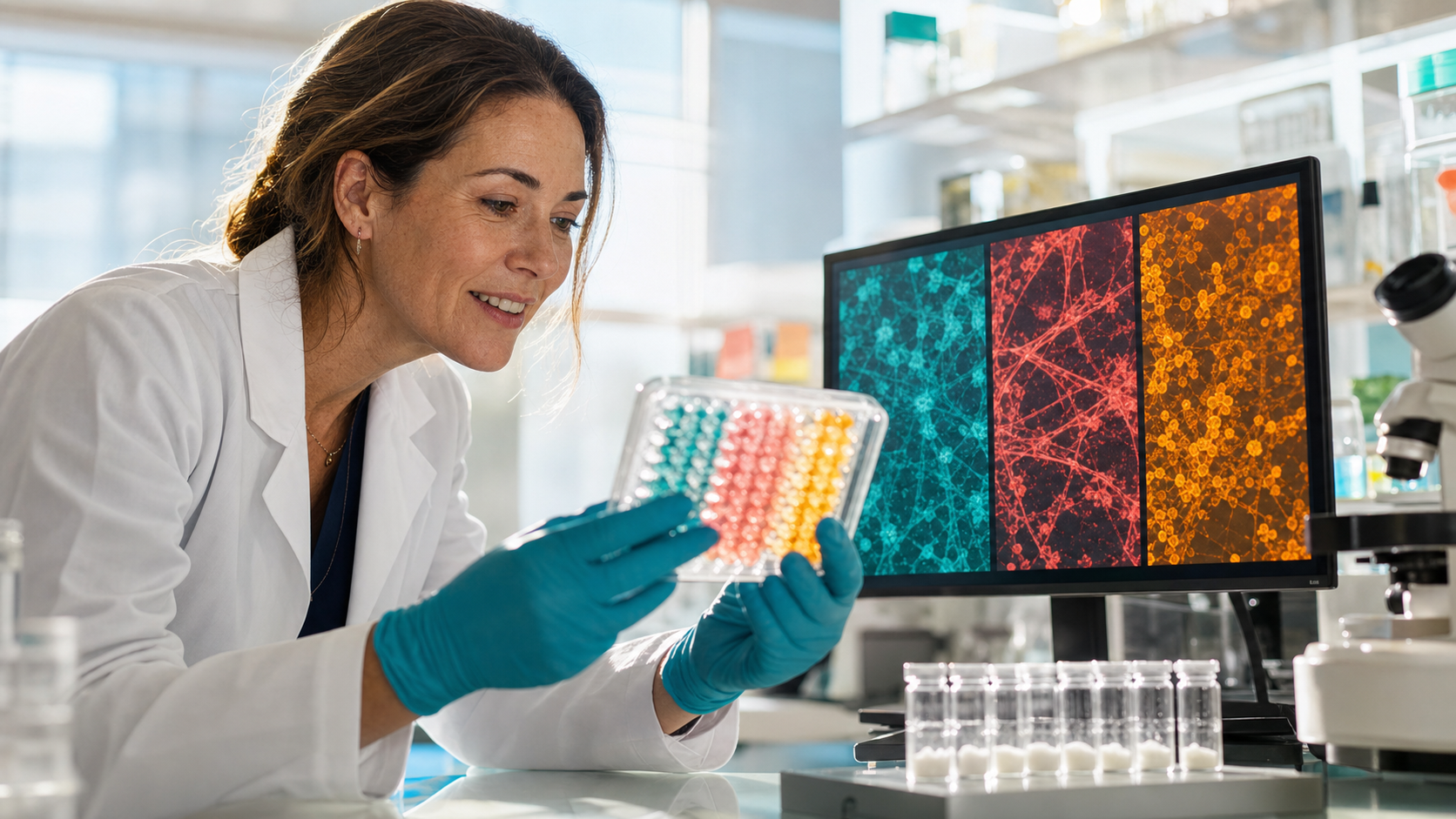
Scientist reviewing three colorful metabolic assay channels beside research vials

Metabolic Peptide Overview

Retatrutide in the Spotlight: What Triple-Agonist Studies Measure

Seven straightforward reasons the GLP-1, GIP, and glucagon triple-agonist model has become a major metabolic research topic.

Compound overview • 4 minute read

Quick Take

Retatrutide is a single peptide designed to activate three metabolic receptors: GLP-1, GIP, and glucagon. That triple-receptor profile allows researchers to examine appetite, glucose regulation, insulin sensitivity, energy use, body weight, and liver-fat biology together.

Why It Gets Attention

Most incretin research starts with one or two receptors. Retatrutide adds glucagon-receptor activity to the GLP-1 and GIP framework, creating a broader model for studying both energy intake and energy expenditure.

Phase 2 human trials have produced measurable changes in body weight, glucose control, liver fat, waist circumference, and other metabolic markers, making the research story unusually direct.

7 Key Areas Worth Knowing

The clearest themes are summarized below.

01

Body-Weight Reduction

Phase 2 research reported substantial, dose-related reductions in body weight. This makes total weight change and the percentage reaching defined reduction targets central endpoints.

02

Glucose Control

GLP-1 and GIP receptor activity supports glucose-dependent insulin signaling. Trials in type 2 diabetes have tracked HbA1c, fasting glucose, and time spent within target glucose ranges.

03

Appetite and Food-Intake Signaling

The incretin side of the molecule is strongly connected with satiety and appetite pathways. Researchers examine hunger, food cravings, meal size, and overall energy intake.

04

Liver-Fat Reduction

A randomized phase 2 substudy reported large reductions in liver fat at higher studied doses. Liver fat, liver enzymes, and metabolic liver markers are therefore major areas of interest.

05

Insulin Sensitivity

Retatrutide research has connected metabolic improvements with better insulin-sensitivity markers. This allows researchers to follow fasting insulin, glucose disposal, and related metabolic measurements.

06

Lipid and Energy Metabolism

Glucagon-receptor activity adds an energy-use component to the incretin model. Triglycerides, cholesterol, fatty-acid use, and energy expenditure become useful comparison points.

07

Waist and Abdominal-Fat Changes

Body weight alone does not show where change occurs. Studies also measure waist circumference, visceral fat, and abdominal subcutaneous fat for a clearer body-composition picture.

Why Retatrutide Stands Out

Three Receptors in One Molecule

Retatrutide combines GLP-1, GIP, and glucagon receptor activity. This gives researchers a way to study appetite control, insulin signaling, glucose regulation, and energy use within one coordinated model.

The Glucagon Component Changes the Comparison

Glucagon signaling is associated with hepatic energy metabolism and fuel mobilization. Adding that pathway distinguishes Retatrutide from GLP-1-only and GLP-1/GIP dual-agonist research.

The Human Data Are Easy to Measure

Phase 2 trials reported clear changes across weight and glucose endpoints. The liver-fat substudy also provides direct imaging data, giving researchers more than a single scale-based outcome.

It Supports Head-to-Head Metabolic Models

Retatrutide can be compared with Semaglutide and Tirzepatide to isolate the value of each added receptor. That makes it especially useful for mapping single-, dual-, and triple-agonist research.

What Can Be Measured

These highlighted areas are most useful when treated as connected but separate endpoints. A controlled comparison can track body-weight reduction, glucose control, appetite and food-intake signaling, liver-fat reduction, insulin sensitivity, lipid and energy metabolism, and waist and abdominal-fat changes at planned time points. This turns a broad question into clear observations and shows which part of the compound’s profile changes most strongly.

A strong design also connects each outcome with the biology behind it. Measurements can be paired with markers related to three receptors in one molecule, the glucagon component changes the comparison, the human data are easy to measure, and it supports head-to-head metabolic models. Combining visible or functional results with mechanism-focused data makes the positive findings easier to interpret, repeat, and compare across the available cell, animal, and clinical literature.

Evidence and Limitations

Retatrutide remains investigational, and current evidence is based mainly on controlled clinical-development formulations. Research conclusions should remain tied to the studied material and trial design.

The Bottom Line

Retatrutide stands out because its triple-receptor design creates an unusually broad metabolic research model. Body weight, glucose control, appetite, liver fat, insulin sensitivity, lipids, and abdominal fat can all be studied within the same receptor framework.


Sources

  1. Retatrutide phase 2 obesity trial.
  2. Retatrutide phase 2 type 2 diabetes trial.
  3. Retatrutide randomized liver-fat substudy.

Related Resources

Review Retatrutide 20mg or Open the Research Protocol

Research-use disclaimer: This article is for laboratory research education only. It does not provide medical advice or establish safety, efficacy, or suitability. Products discussed are not intended for human consumption, therapeutic use, diagnostic use, or veterinary use.